Built in North Carolina. Trusted Nationwide.
If you want laser cutting services that deliver accuracy, speed, and American-made reliability, US Metal Crafters is the partner you call.
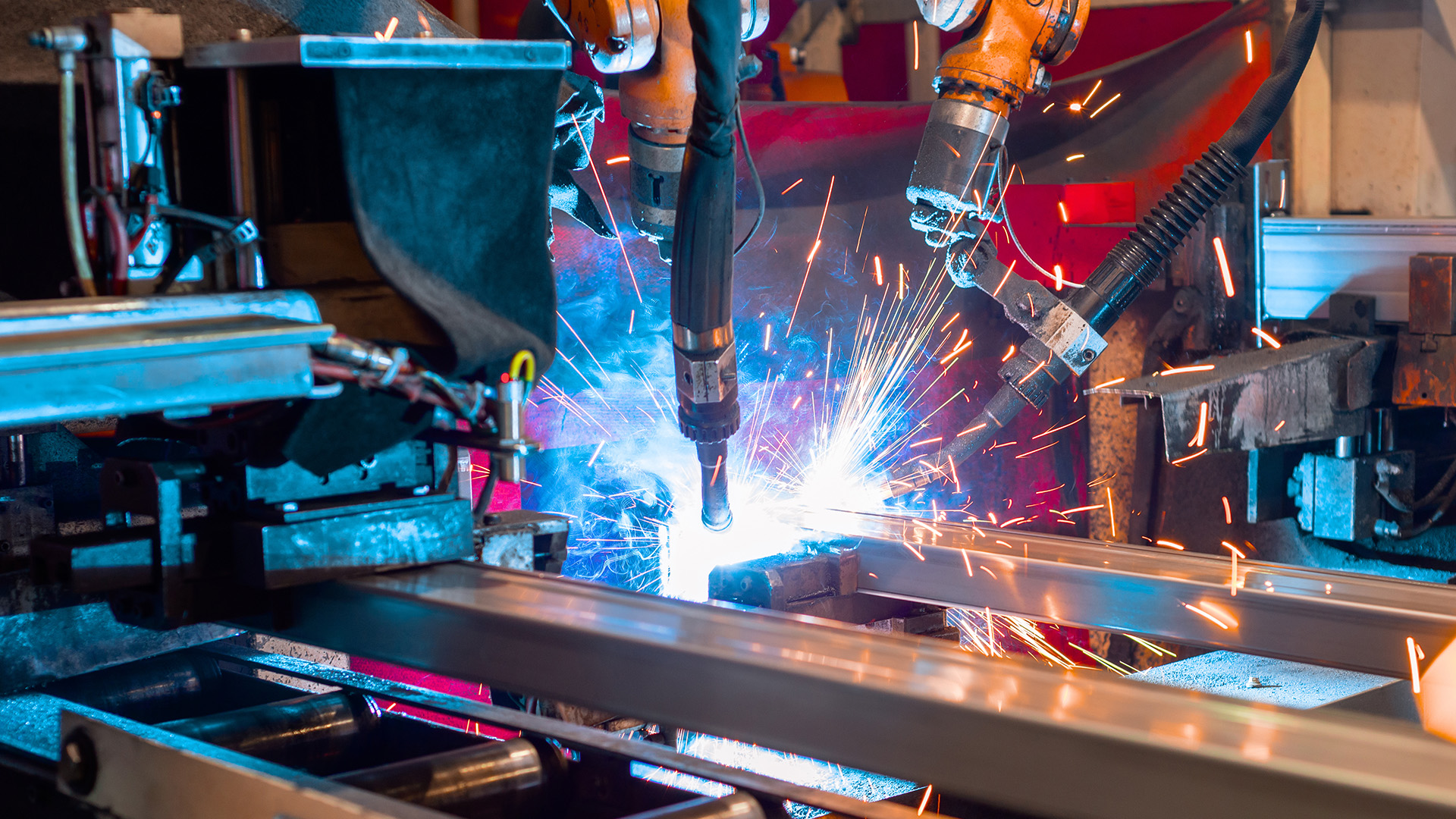
Our tagline is "Robots don't answer our phones; they weld your parts." It gets a laugh at trade shows, and it's also an accurate description of how the building runs. The robotic welding cells, lasers, and presses do what machines are good at: the same thing, the same way, thousands of times. The phone gets answered by a person who knows your job by name. That split is deliberate. Automate the work that rewards repetition. Put a person on the work that rewards judgment. Most vendors get one of those right. The ones that get it backwards are usually the ones you end up replacing.
On the floor, repeatability is the whole game. Three lasers cut material up to 1" thick at up to 200 inches per minute, holding ±0.010" on sheets up to 72" × 144". Robotic MIG welding handles high-volume runs where every bead should match the last one. Ten presses, from 35 to 200 tons, run everything from high-speed coil work to heavy-tonnage hits, on dies built and repaired in our own tool room.
The data is automated too. First-article parts get 3D/planar scans, and production runs are tracked against real-time KPIs. Problems show up as a number on a screen while the job is still running, not as a rejected pallet at your receiving dock. Machines are very good at producing that number. They are not good at deciding what to do about it.
When a KPI drifts, a first-article scan comes back out of spec, or a material delivery slips, someone has to make a call: hold the run, adjust the setup, re-sequence the schedule, or pick up the phone and tell the customer. That's a judgment job, and at USMC it belongs to people with names and direct lines:
When you call about a part, you're talking to someone who can walk out to the floor and look at it.
Ask a procurement team why they replaced their last fabricator, and you rarely hear "the welds were bad." You hear things like:
Those are communication failures, and in our own win/loss data, poor communication and missed deadlines are the most common reasons a buyer comes to us in the first place. Equipment doesn't fix that. A shop can buy the same lasers we run and still leave you guessing on a Thursday afternoon. The machine tells you what happened. The person tells you what happens next.
1. Taking "we have great communication" at face value.
Every vendor says it. It's not a spec. Ask who specifically you'll be talking to and how you'll hear about a slip.
2. Judging responsiveness during the sales cycle.
Everyone answers fast when they're trying to win the PO. What matters is who answers in month six, when your job is one of many on the floor.
3. Accepting a general inbox as a point of contact.
A shared email address is a routing system, not accountability. If there's no name attached, there's no one who owns the answer.
4. Assuming more automation means less need for people.
Automation makes production more consistent. It doesn't make decisions when something goes wrong. The more automated the floor, the more it matters who's watching the data.
5. Not asking who owns quality on your account.
"Our quality department" is a department. A QAPM is a person. When a part is out of spec, you want to know whose desk the problem lands on.
6. Measuring the vendor only on price and lead time.
Both matter. But a vendor who tells you about a problem on Monday gives you options. A vendor who tells you on Friday gives you excuses, and that cost doesn't show up on the quote.
No shop hits every date. Steel arrives late, a die needs repair, a customer pushes a revision mid-run. The difference is when you hear about it and from whom. Here's the sequence at USMC:
You get the bad news early, from a person, with a plan attached. That isn't a premium service tier. It's the default.
Modern equipment and old-fashioned accountability aren't competing ideas. The equipment is what makes the parts consistent; the accountability is what makes the relationship workable. USMC runs both in one 155,000 sq. ft. building in Archdale, NC, with laser cutting, stamping, forming, AWS D1.1 certified welding, 500-hour salt-fog tested powder coating, and assembly on one schedule, and named people who own your job from quote to shipment.
If your current vendor has the machines but you still find out about problems last, that's worth a conversation.
Tired of chasing status updates? Schedule a Call and talk to the people who would actually own your job.
